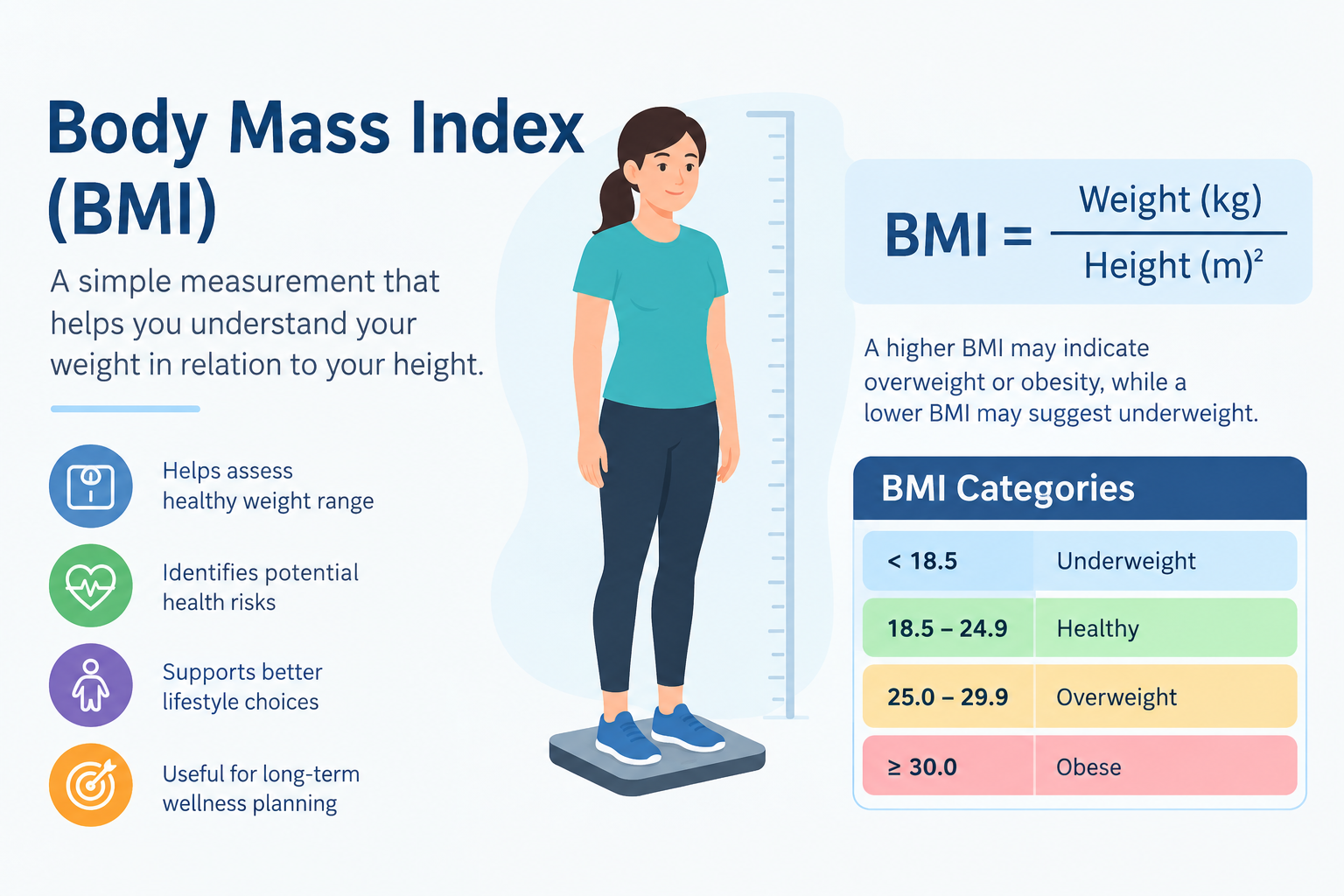
Body Mass Index (BMI) is a simple health measurement based on your weight in relation to your height. It is commonly used as a general screening tool to place adults into weight categories such as underweight, healthy weight, overweight, and obese. Understanding your BMI can help you become more aware of your current weight status and identify when additional health guidance may be appropriate.
Sheba Pabo provides an easy-to-use BMI Calculator where you can enter your weight in kilograms and your height in feet and inches to calculate your BMI and review the corresponding health category.
What Is BMI?
BMI stands for Body Mass Index. It compares body weight with height and provides a numerical value that can be used as a general indicator of weight status. BMI is useful for screening large groups of people and for providing an initial indication of whether a person's body weight may be lower or higher than expected for their height.
However, BMI does not directly measure body fat and does not account for muscle mass, body composition, or individual differences. Because of this, BMI should be considered a general health indicator rather than a complete assessment of a person's overall health.
BMI Categories at a Glance
| BMI Range | Category | General Health Insight |
|---|---|---|
| Below 18.5 | Underweight | May indicate lower body weight for height and possible nutritional concerns. |
| 18.5 - 24.9 | Healthy Weight | Generally considered the healthy BMI range. |
| 25.0 - 29.9 | Overweight | May indicate increased health risks associated with excess body weight. |
| 30.0 or higher | Obese | Associated with a higher risk of several chronic health conditions. |
Underweight: BMI Below 18.5
A BMI below 18.5 indicates that body weight is lower than the standard range for height. Being underweight may be related to genetics, a high metabolism, inadequate food intake, or other underlying nutritional or health issues.
According to Sheba Pabo's BMI health guidance, people in this range may have an increased risk of weakened immunity and nutrient deficiencies. Possible concerns include iron deficiency and anemia, calcium deficiency and bone health problems, fatigue, dry skin, and hair loss.
Health guidance: Focus on nutrient-dense foods such as nuts, avocados, and whole grains, and consider resistance training to support muscle development. A consultation with a nutritionist may be helpful when there are concerns about nutrition, absorption, or underlying metabolic problems.
Healthy Weight: BMI 18.5 - 24.9
A BMI between 18.5 and 24.9 is considered the healthy range in the standard BMI categories. Maintaining a healthy body weight along with a balanced diet and regular physical activity can support long-term health.
A healthy BMI does not automatically mean that every aspect of health is optimal. BMI does not measure the proportion of muscle and body fat, so a person's complete health assessment may also require consideration of other factors such as waist circumference, blood pressure, physical activity, and overall lifestyle.
Health guidance: Maintain balanced nutrition and regular physical activity, and continue monitoring important health indicators such as waist circumference and blood pressure as appropriate.
Overweight: BMI 25.0 - 29.9
A BMI from 25.0 to 29.9 falls within the overweight category. This range can be an early indication that excess body weight may be increasing the strain on the heart, lungs, joints, and metabolic system.
Sheba Pabo's health guidance highlights possible associations with high blood pressure, insulin resistance, prediabetes, and joint discomfort, particularly when excess weight is concentrated around the midsection.
Health guidance: Sustainable weight management may include increasing fiber-rich foods, reducing processed sugars, and maintaining regular physical activity. Sheba Pabo's BMI health page recommends aiming for at least 150 minutes of moderate activity per week and notes that losing around 5-10% of body weight can reduce certain health risks.
Obese: BMI 30.0 or Higher
A BMI of 30 or higher falls within the obesity category. Sheba Pabo's health guidance describes obesity as a complex chronic condition associated with an increased risk of serious health problems, including coronary heart disease, stroke, sleep apnea, and certain cancers.
Higher levels of excess body weight can also be associated with metabolic syndrome and other metabolic health concerns. The liver may also be affected, including the development of fatty liver disease. Weight management is not simply a matter of willpower and can involve a combination of genetic, environmental, behavioral, and medical factors.
Health guidance: Professional medical guidance can be important for people in this category. Weight management may involve doctors, nutritionists, physical activity, and sustainable long-term lifestyle changes. Crash diets and extreme approaches should be avoided in favor of an individualized and sustainable plan.
How to Calculate Your BMI
Calculating BMI requires two basic measurements: your body weight and your height. The Sheba Pabo BMI Calculator allows you to enter your weight in kilograms and height in feet and inches, then calculates your BMI and displays your result through a vitality meter.
You can calculate your BMI online using the Sheba Pabo BMI Calculator.
What Does Your BMI Result Mean?
Your BMI result places you into a general weight category. A lower value may fall into the underweight category, a value from 18.5 to 24.9 is categorized as healthy weight, 25.0 to 29.9 is overweight, and 30.0 or higher is categorized as obese according to the standard categories presented by Sheba Pabo.
A BMI result should be interpreted as one part of a broader health assessment. Two people with the same BMI can have different amounts of muscle and body fat and can have very different health profiles.
BMI Is a Screening Tool, Not a Diagnosis
BMI can be useful for identifying broad weight categories, but it cannot diagnose a disease or determine an individual's complete health status. Age, muscle mass, body composition, lifestyle, family history, and other clinical factors may also matter.
For this reason, an unusual BMI result, rapid change in body weight, ongoing fatigue, nutritional concerns, or other health symptoms may warrant professional medical evaluation rather than relying on BMI alone.
BMI and Healthy Weight Management
- Choose a balanced and nutrient-rich diet.
- Maintain regular physical activity appropriate for your health and fitness level.
- Monitor important health indicators such as blood pressure and waist circumference when appropriate.
- Avoid extreme or crash diets.
- Seek guidance from a qualified doctor or nutritionist when weight-related health concerns persist.
Frequently Asked Questions About BMI
What is a healthy BMI?
According to the standard categories displayed on the Sheba Pabo BMI Calculator, a BMI from 18.5 to 24.9 falls within the healthy weight range.
What BMI is considered overweight?
A BMI from 25.0 to 29.9 is categorized as overweight on the Sheba Pabo BMI Calculator.
What BMI is considered obese?
A BMI of 30.0 or higher is categorized as obese on the Sheba Pabo BMI Calculator.
Can a healthy BMI guarantee good health?
No. BMI is a general screening measurement and does not account for muscle mass, body composition, or every aspect of health. A complete health assessment may require other measurements and clinical factors.
How can I calculate my BMI online?
You can use the Sheba Pabo BMI Calculator. Enter your weight in kilograms and your height in feet and inches to calculate your BMI.
Check Your BMI with Sheba Pabo
Knowing your BMI is a simple first step toward understanding your current weight category. Use the Sheba Pabo BMI Calculator to calculate your BMI, review the category associated with your result, and use the information as part of a broader approach to maintaining your health.
Important: BMI is a general screening measure and should not be used by itself to diagnose a medical condition or replace professional medical advice.